
Ever sent a meme to the group chat thinking it was funny and got nothing but a blue tick and silence?
Now imagine your marketing doing the same thing. You post a reel, launch a campaign, share a blog and still, no response, just silence. It’s not always your content. More importantly, it's how you use digital marketing tools.
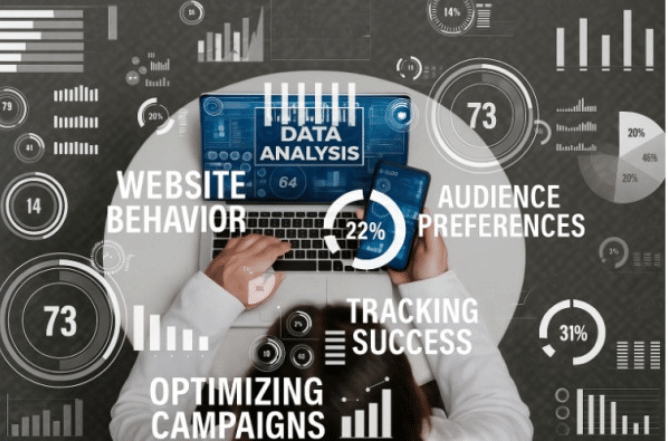
This new age digital marketing isn’t just about posting, it's about tracking, testing, and tweaking, and that’s where Analytics and Data-Driven Marketing comes in—like the smart friend who understands the vibe before saying a word.
Imagine your website is a party. You’ve got the playlist, snacks, and fairy lights all set. But no one’s vibing. That’s when Google Analytics walks in with a clipboard and says, “Let me tell you what’s going on.”
You’ll know where your visitors are coming from, maybe Instagram, maybe Google, maybe that one email newsletter you forgot about. You’ll see how long they’re sticking around and what pages they’re checking out. But most importantly, you’ll know who’s leaving without engaging. That’s your bounce rate, a gentle (or not-so-gentle) nudge that something might be off. Then come conversions. These are your golden moments when someone actually signs up, purchases, or clicks the thing you want them to. This tells you what’s working and what deserves the spotlight. By using these insights, you’re no longer just posting and praying. You’re tracking, learning, and improving on purpose.
Social media is a strange beast. Sometimes a random dog video pops off, and your well-thought-out campaign gets ignored. But with social media analytics, you don’t need to rely on luck. You can see how many people saw your post (reach), how many interacted with it (engagement), and who those people are (demographics). It's possible that the majority of your followers are night owls who browse around eleven p.m. Maybe they love short videos over long captions. These tiny details tell you exactly how to shape your strategy. When you understand what type of content performs and who it connects with, social media marketing becomes a two-way street, not just you yelling into the internet void.
You’re torn between two versions of a caption. One is funny, the other is clear and straightforward. Which one should you go with? Simple: test both. That’s the magic of A/B testing, creating two versions of your content and seeing which one performs better. Whether it’s a headline, image, button color, or even the timing of your post, every little detail can impact performance. Instead of trusting your gut, you’re letting your audience decide with their clicks, scrolls, and sign-ups. And the result? Smarter campaigns and more confident content choices.
Let’s get honest. Although vanity metrics like likes and shares are entertaining, they don't necessarily produce outcomes. That’s where ROI (Return on Investment) steps in to keep it real. You spent ₹5,000 on ads and made ₹15,000 in sales? Nice ROI. But if that ₹5,000 didn’t bring in any returns, then your strategy needs adjusting. Measuring ROI helps you understand what channels, creatives, and messages are actually bringing value. It's important to do the work that works, not simply the work.
Every click, browse, bounce, and purchase is actually a clue. And the way you interpret those hints is through analytics and data-driven marketing. The goal is to transform behaviour into strategy, not to become overwhelmed with spreadsheets. You may learn what your audience wants rather than speculating about it. Content can be customised rather than thrown into the wind. You may create interaction rather than hoping for it. You don't have to be an expert in technology. All you have to do is care enough to listen. Because there is a narrative behind every figure, and a successful plan behind every convert. Therefore, don't freak out the next time your material fails to land. Simply open your analytics. The solutions are already available.
 Wanna stay updated about courses